Most pond owners start with the same picture: a white plume in the middle of the water. Some of them need that fountain. Others have a deep pond, and the plume will never reach the water that is short of oxygen.
The two tools do different jobs. University extension services have measured what moving water does for a pond and what it does not, and their findings settle most of the choice.
What moving water does for a pond
Fish breathe oxygen that is dissolved in the water. Pond scientists call it DO and measure it in milligrams per litre. Warm water holds less of it than cold water, so the tight months are July and August.
Pond water at 40°F in March may hold over 12 mg/L of DO, but the same water will only hold around 8 mg/L of DO in July when the water temperature is at 80°F.
Oxygen gets into a pond from the air, from plants and algae during daylight, and from streams. At night the plants stop making it and everything in the pond keeps using it. The low point comes just before sunrise.
Fish like largemouth bass and bluegills prefer DO levels above 5.0 mg/L but can tolerate lower levels for limited periods.
A machine adds to that natural supply. It does not replace it, and a healthy pond may not need one at all. Oklahoma State University Extension puts it in plain words.
The typical pond does not need supplemental aeration.
So the first question is not which machine. It is what you want from the water: a spray to look at, a safer summer for the fish, less muck on the bottom, or all three. The answer points to a fountain, to an aerator, or to both.
What a floating fountain does, and what it does not
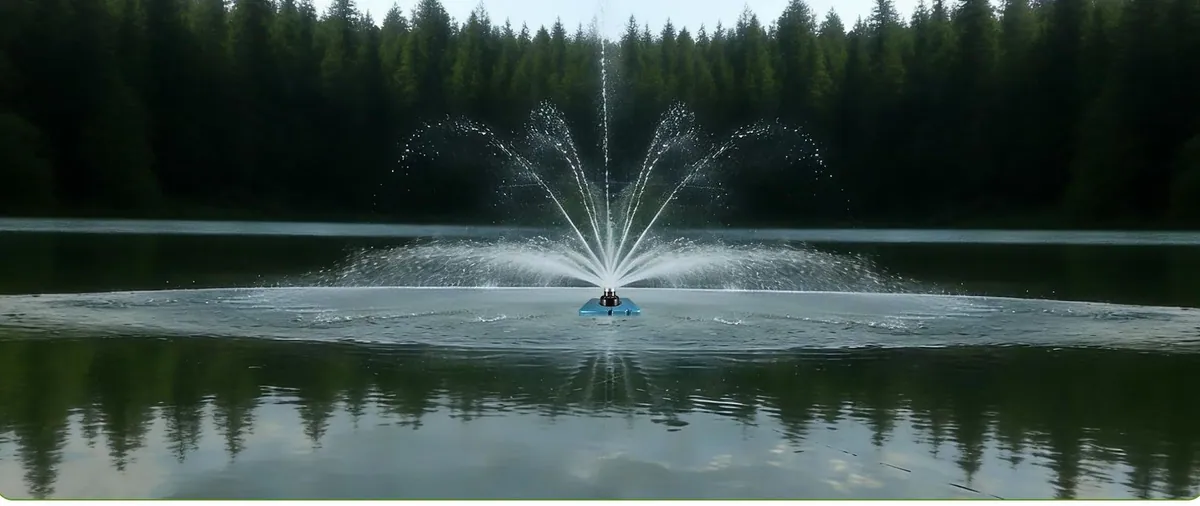
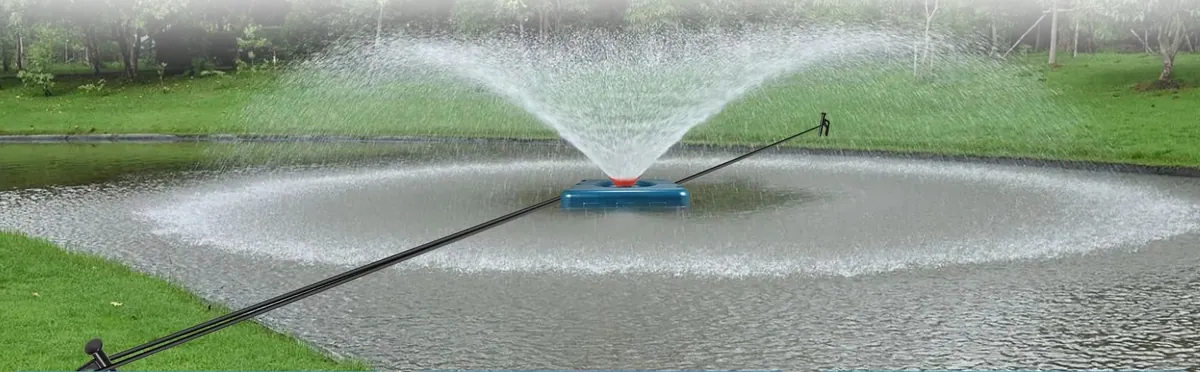
A floating fountain is a pump under a float. It pulls water from just below the surface and throws it into the air. The drops pick up oxygen on the way down and the splash stirs the top layer. Our F2 moves 15,000 gallons an hour this way.
That is the honest limit of a fountain. Penn State Extension describes it without flattery, and we would sooner you read it here than find it out in August.
Fountains serve a mostly decorative function, but can add some DO to the pond's surface layers.
For a shallow pond, the surface layer is most of the pond. A fountain there does real work, and it is the only tool of the two that you can enjoy from the porch. For a pond 15 or 20 feet deep, the spray is decoration on top of water it does not touch.
What a bottom aerator does
A bottom aerator keeps its machine on shore. A compressor pushes air down a weighted hose to a diffuser on the pond bed, and the diffuser breaks the air into small bubbles. Our A3 runs 2 diffusers from one compressor. The rising bubbles drag bottom water up with them, and that slow lift turns the whole pond over.

Subsurface diffusers circulate DO throughout a pond's entire depth which benefits fish populations and may also reduce weeds and algae growth by minimizing the release of phosphorus from pond sediments.
There is no plume. From the bank you see a patch of boiling water about the size of a kitchen table. People who buy an aerator for looks are disappointed, and people who buy it for the fish are not.
Installation of diffuse aerators on the bottom of the pond can increase the vertical habitat in the pond by allowing fish to live in deeper parts of the pond that were previously low in dissolved oxygen.
Fountain or aerator: the two side by side
A floating fountain and a bottom aerator differ on six counts. The one that decides is when each is the better choice.
| Floating fountain | Bottom aerator | |
|---|---|---|
| Where the machine sits | On the water, under a float | On shore, under a rain cover |
| What you see | A spray pattern | A boil of bubbles |
| Water it moves | The surface layer | The full depth above the diffuser |
| Depth it suits | From 18 in of water | Up to 30 ft |
| Can carry lights | Yes | No |
| Our example | F2 Floating Pond Fountain and F3 Floating Pond Fountain | A3 Pond Aerator |
| Better choice when | The pond is shallow, or you want something to look at | The pond is deep, or fish and bottom muck are the worry |
Many ponds end up with both. The aerator runs for the water and the fountain runs for the evening. If you can afford only one and the pond is deeper than a tall man can stand in, extension advice leans toward the diffuser.
Start with the depth of your pond
Measure before you order. Tie a weight to a cord, mark the cord every foot, and drop it from a boat or the end of a dock in 5 or 6 places. Write down the deepest reading and the reading where the fountain would float.
- 1
Under 4 feet
A floating fountain reaches most of the water. It needs 18 inches under the float to run.
- 2
4 to 10 feet
A fountain still stirs a useful share of the pond. Watch the fish at dawn in August: gulping at the surface means the bottom is short of oxygen.
- 3
Over 10 feet
Put the air at the bottom. The A3 is rated for ponds up to 30 feet deep and 5 acres.
Size matters as well, and no table on a web page can size a pond for you. The extension service puts it bluntly, and we agree with it: ask someone who will look at your pond.
The cost to purchase, maintain and operate such systems can be significant and should be fully understood before committing to install one.
The Goldlife pond line in numbers
These are the machines we make for ponds, with the figures from their product details and the current prices. Ratings are what buyers have given them so far.
| Product | Type | Motor | Moves | Price | Buyer rating |
|---|---|---|---|---|---|
| F2 Floating Pond Fountain | Floating pond fountain | 750 W (1 HP) | 15,000 GPH | from $149.99 | 4.3 from 363 ratings |
| F3 Floating Pond Fountain | Floating pond fountain | 750 W (1 HP) | 15,000 GPH | from $199.99 | 4.0 from 105 ratings |
| A3 Pond Aerator | Bottom-diffused pond aerator | 750 W (1 HP) | 7 CFM of air | $284.99 | 4.0 from 31 ratings |
The F2 and the F3 share one pump: 1 HP, 750 W, 15,000 gallons an hour, on 100 ft of cord. The difference is the float and the lights. The F2 rides a blue square float and takes a separate light ring. The F3 rides a black octagon and can carry 4 lights on the float itself.
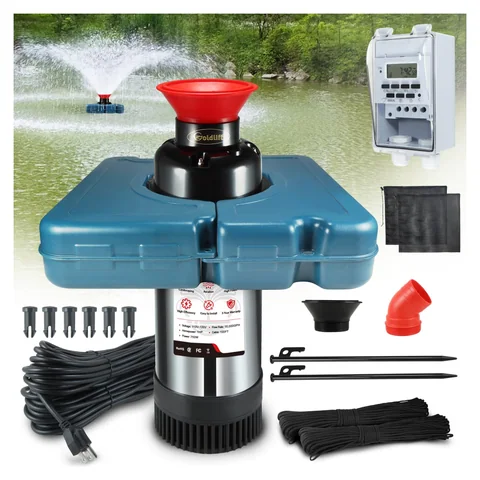 F2 Floating Pond Fountain1 HP · 110 V · 100 ft cord · $149.99
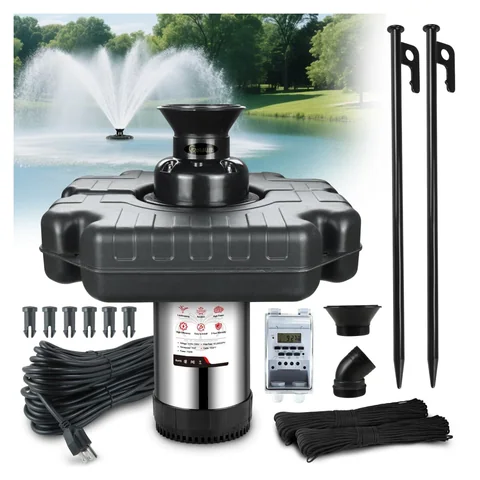 F3 Floating Pond Fountain1 HP · 110 V · 100 ft cord · $199.99
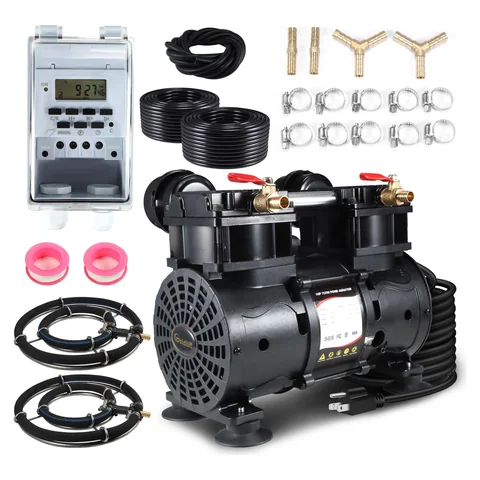 A3 Pond Aerator1 HP · 7 CFM · 110 V · $284.99
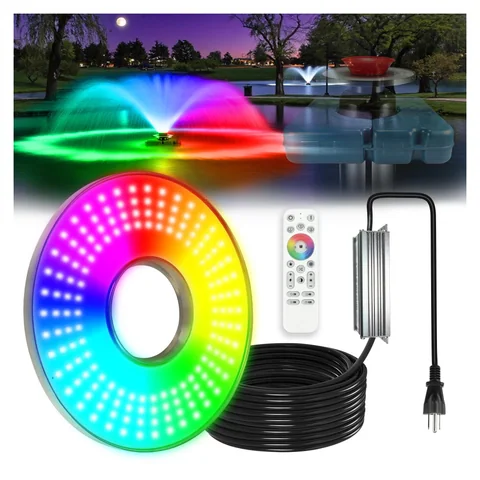 F0 Fountain Light RingRGBW · IP68 · 100 ft cord · $149.99
Power: what 1 HP draws and what it costs to run
A 1 HP pump draws about 750 watts. Run it for an hour and it uses 0.75 kilowatt-hours. Your bill charges by the kilowatt-hour, so the arithmetic is short: hours a day, times 0.75, times your rate.
| Hours a day | kWh a day | kWh in a 30-day month |
|---|---|---|
| 6 hours | 4.5 | 135 |
| 12 hours | 9 | 270 |
| 24 hours | 18 | 540 |
Take the monthly figure and multiply it by the price per kilowatt-hour on your own bill. Rates differ by state and by season, so the dollar figure is yours to work out.
Oklahoma State gives a way to cut that bill without giving up the benefit. It applies to surface units such as fountains.
Oftentimes surface aerators are not run continuously because of the cost of electricity. If this is the case, then they should be run at night when there is no natural production of oxygen by pond plants.
Putting a timer on it
Each of our fountains comes with a timer, and the same timer is sold alone as the Outdoor Programmable Timer Switch. It holds 20 on and off programs on a 7-day cycle. A schedule also rests the motor. The A3 kit includes a timer for the same reason.
- Night aeration: on at 8 in the evening, off at 7 in the morning.
- Show hours: on from late afternoon until bedtime, when someone is there to look.
- Split run: 2 hours on, 1 hour off, around the clock in a heat wave.
Buyers of the timer tell us two things. They like that it survives rain under its clear cover. They do not like the small terminals, which are tight to wire, and the clock shows 24-hour time only.
Setting up a floating fountain
F2 Floating Pond Fountain1 HP · 110 V · 100 ft cord · $149.99F3 Floating Pond Fountain1 HP · 110 V · 100 ft cord · $199.99F0 Fountain Light RingRGBW · IP68 · 100 ft cord · $149.99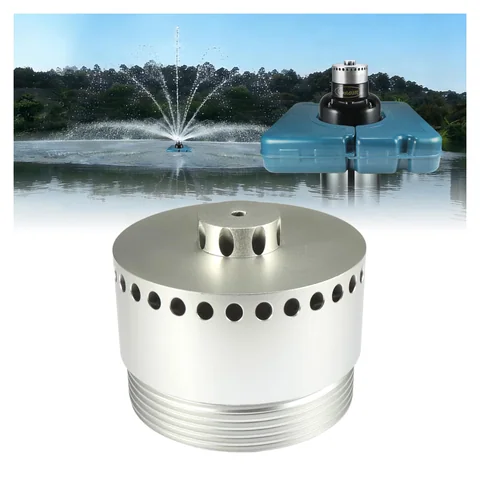 Fountain Nozzles N1, N2 and N3For Goldlife fountains · $29.99
A fountain is a one-person job with a small boat or a pair of waders. Lay everything out on the bank first and check the parts against the manual.
- 1
Fit the nozzle
Screw the nozzle you want onto the pump by hand. Change it later from a boat without lifting the pump.
- 2
Tie two ropes
Fix a rope to each side of the float. Two ropes on opposite sides stop the float from spinning and twisting the cord.
- 3
Float it out
Push the fountain to its place. Keep it over at least 18 inches of water and clear of weed beds.
- 4
Anchor the ropes
Tie each rope to a ground stake on shore, or to a weight on the bottom. Leave a little slack for changes in water level.
- 5
Run the cord
Lead the cord to the bank along a rope. Do not let it hang where a mower or a hoof will find it.
- 6
Plug in through the timer
Connect the timer to a 110 V outlet with ground-fault protection, then the fountain to the timer.
Our Fountain Pump Filter Bags go over the pump before it gets wet. A mesh bag keeps leaves and string algae out of the intake. It also needs rinsing, because a clogged bag starves the pump. Check it after the first week and then monthly.
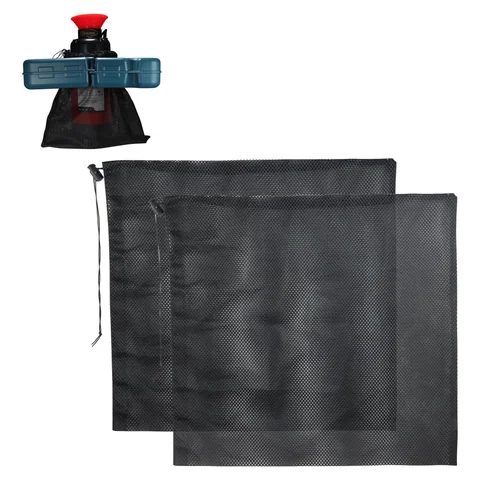 Fountain Pump Filter Bags2 bags · 18.1 x 17.3 in · $14.76
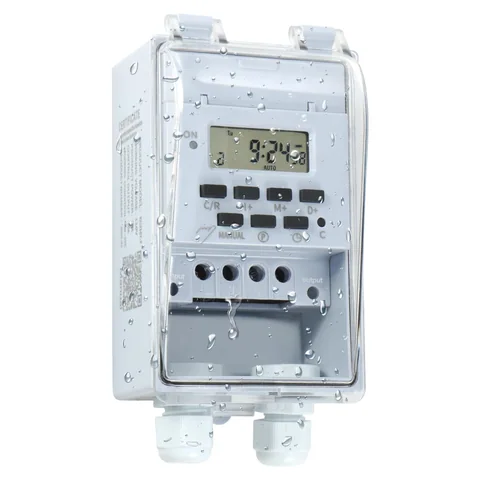 Outdoor Programmable Timer Switch110 V · 20 on/off programs · $24.99Fountain Nozzles N1, N2 and N3For Goldlife fountains · $29.99
Nozzles change the pattern, not the pump
The same 15,000 gallons can go up as a narrow column or out as a wide umbrella. That is the nozzle's doing. A fountain ships with 3 nozzles, and our Fountain Nozzles N1, N2 and N3 add more shapes.
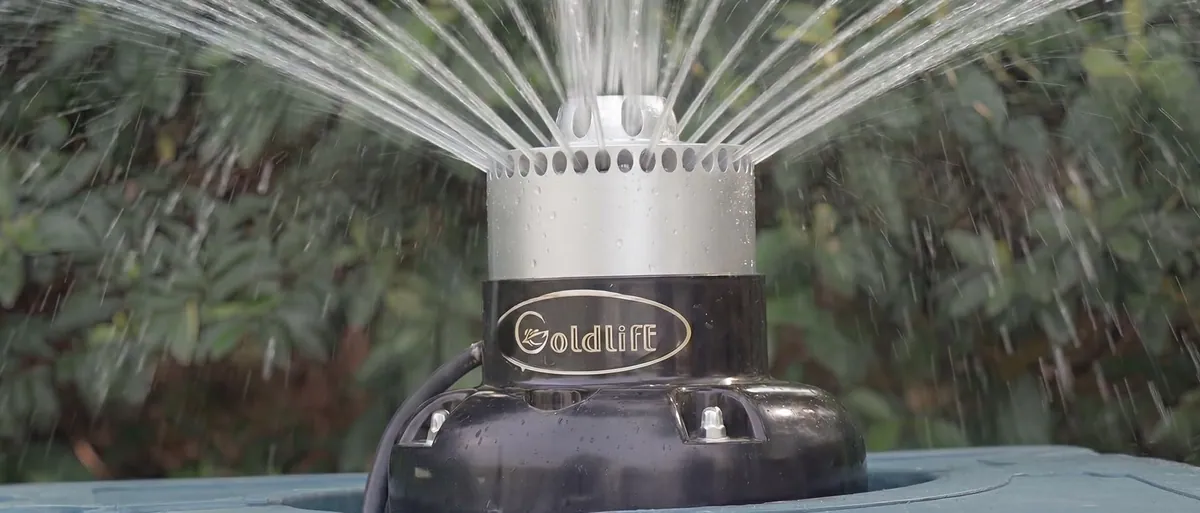
| Nozzle | Material | Pattern | Price |
|---|---|---|---|
| N2 nozzle | Aluminium alloy | Three-layer flower, up to 16 ft high and 36 ft wide | $29.99 |
| N1 nozzle | Aluminium alloy | Two-layer umbrella, up to 16 ft high and 36 ft wide | $39.99 |
| N3 kit | ABS, 4 heads | 4 patterns, one per head | $39.99 |
A tall pattern loses more water to wind. On an exposed pond, a low wide pattern keeps the water in the pond and the float where you put it. One buyer found that our nozzle did not fit another make of pump, so check the collar size first.
Light on the water
Light does nothing for the fish. It is there for you, and it is the reason many people buy a fountain in the first place. We make it two ways.
| F3 with 4 RGB lights | F0 light ring | |
|---|---|---|
| Where the light sits | 4 lamps on the float | A ring around the nozzle |
| Works with | The F3 it is sold with | F1, F2 and F3 fountains |
| Light output | 4 x 1,200 lm | 20,000 lm (F0) or 16,000 lm (F0-1) |
| Cord | Shares the fountain cord | Its own 100 ft cord |
| Price | $274.99 with the fountain | from $149.99, light only |
The F3 lights switch with the pump, so they also burn through the day unless the timer turns the whole fountain off. The F0 ring has its own cord and its own remote. A few buyers of each report trouble with the remote, and the first fix is a fresh battery and a shorter distance.
Setting up the A3 aerator
The A3 Pond Aerator arrives as a compressor, 2 rolls of sinking hose, 2 diffusers, a timer and a bag of fittings. Plan the layout on paper before you unroll anything.
- 1
Site the compressor
Stand it on shore, above the water line, under a cover that sheds rain and lets air through. A compressor in a sealed box cooks itself.
- 2
Fit the hot section
Connect the 16 ft heat-resistant tube to the air outlets first. The air leaving a compressor is hot enough to soften ordinary hose.
- 3
Join the sinking hose
Clamp a 100 ft roll to each side. Keep both outlets in use: running on one side raises the pressure in the lines.
- 4
Place the diffusers
Lower one diffuser into each deep area. If the bottom is soft, set it on a couple of bricks so silt does not bury it.
- 5
Start slowly
We suggest a short run on the first day and a longer one each day after that.
The last step is not fussiness. A pond that has sat in layers all summer holds water at the bottom with almost no oxygen in it. Stir that up in one go and you spread the bad water through the good.
If improperly installed or operated, submerged air diffuser type aeration systems may mix bottom waters with upper water layers, resulting in a low dissolved oxygen fish kill.
We read our own reviews on this product closely. Several buyers had a hose burst near the compressor in the first days. In each account the ordinary hose was joined straight to the hot outlet. A spare roll of Self-Sinking Aerator Hose is sold separately for longer runs.
Winter
In a cold state, ice changes the job. A frozen, snow-covered pond gets no oxygen from the air and little from plants. An aerator that keeps a hole open lets gas pass both ways.
Aerators prevent ice formation on ponds, which makes them less susceptible to winter kill.
Open water is also thin ice. If people skate or fish on your pond, mark the open area and keep the diffuser in the shallows for the winter. A floating fountain is a warm-season tool. Take it out before a hard freeze and store the pump indoors.
Electricity near water
A fountain puts 110 volts on a cord that ends in a pond. Treat that with respect. The outlet should have ground-fault protection, and the cord should be whole from plug to pump.
Docks should have ground fault circuit interrupter (GFCI) breakers on the circuits feeding electricity to the dock.
Never swim near a marina, dock, or boatyard.
The same rule holds for a pond with a powered fountain in it. Unplug the fountain before anyone wades in to move it, clear weeds or change a nozzle. The 10 seconds at the outlet are the cheapest safety step there is.
As little as 10 milliamps, 1/50th the amount used by a 60-watt light bulb, can cause paralysis and drowning.
What buyers say about the pond line
Praise for the fountains is about the size of the spray and how fast they go in. The complaints are about pumps or lights that stopped in the first season, and one buyer reports rust on a pump after a month.
It livens up a boring pond
It works. No issues so far. Easy to install, and lovely to watch.
Great product! Great buy!
Best purchase I’ve ever made! These are great! Beautiful spray patterns, great price!
Beautiful patterns
Fit perfectly on my pump. Love the variety of patterns this adds.
Keep the order record for any pump. Our fountains carry a 3-year warranty, and a claim starts from that record.
Questions about fountains and aerators
Does a pond fountain add oxygen to the water?
Yes, to the surface layer. A fountain such as the F2 moves 15,000 gallons an hour through the air, and the falling water takes up oxygen. It does not reach the bottom of a deep pond.
How deep does a pond need to be for a floating fountain?
The F2 runs in water as shallow as 18 inches. There is no upper limit, but in water deeper than about 10 feet the spray treats only the top.
Should a pond aerator run all day?
Not on the first day. Start a bottom aerator with a short run and lengthen it over several days. After that, many owners run it 24 hours in summer, which uses 18 kWh a day at 750 W.
- The pond lineGoldlife pond fountains and aeration
- Water notesFishing with a green underwater light
- Water notesChoosing a 12 V LED pool light
Sources
- Penn State Extension, Dissolved Oxygen Basics for Pond Owners, read 8 October 2026
- Penn State Extension, Pond Fisheries Management, read 8 October 2026
- Oklahoma State University Extension, Neighborhood and Urban Pond Management, read 8 October 2026
- Safe Electricity, Prevent Deadly Shocks Around Boats and Docks, read 8 October 2026
- National Fire Protection Association, Protect Yourself from Electric Shock Drowning, read 8 October 2026
- Electrical Safety Foundation International, Electric Shock Drowning: Unknown Danger Lurking in the Water, read 8 October 2026
This note is general information about ponds. It is not engineering or electrical advice for your site.